PROJECT 02
Citation Review Platform
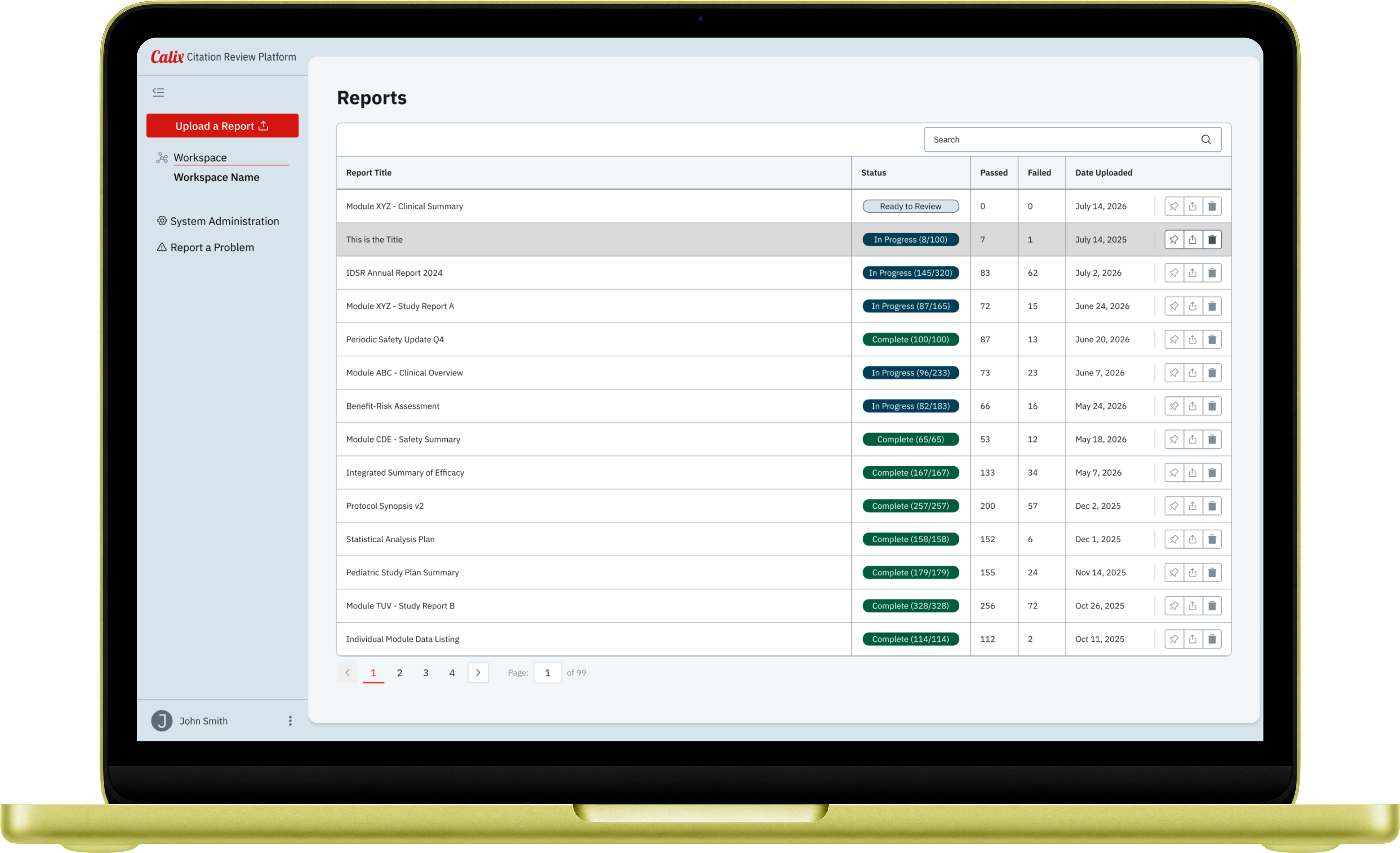
Overview
Reviewing hundreds of citations manually, one source document at a time, was not a process built to scale.
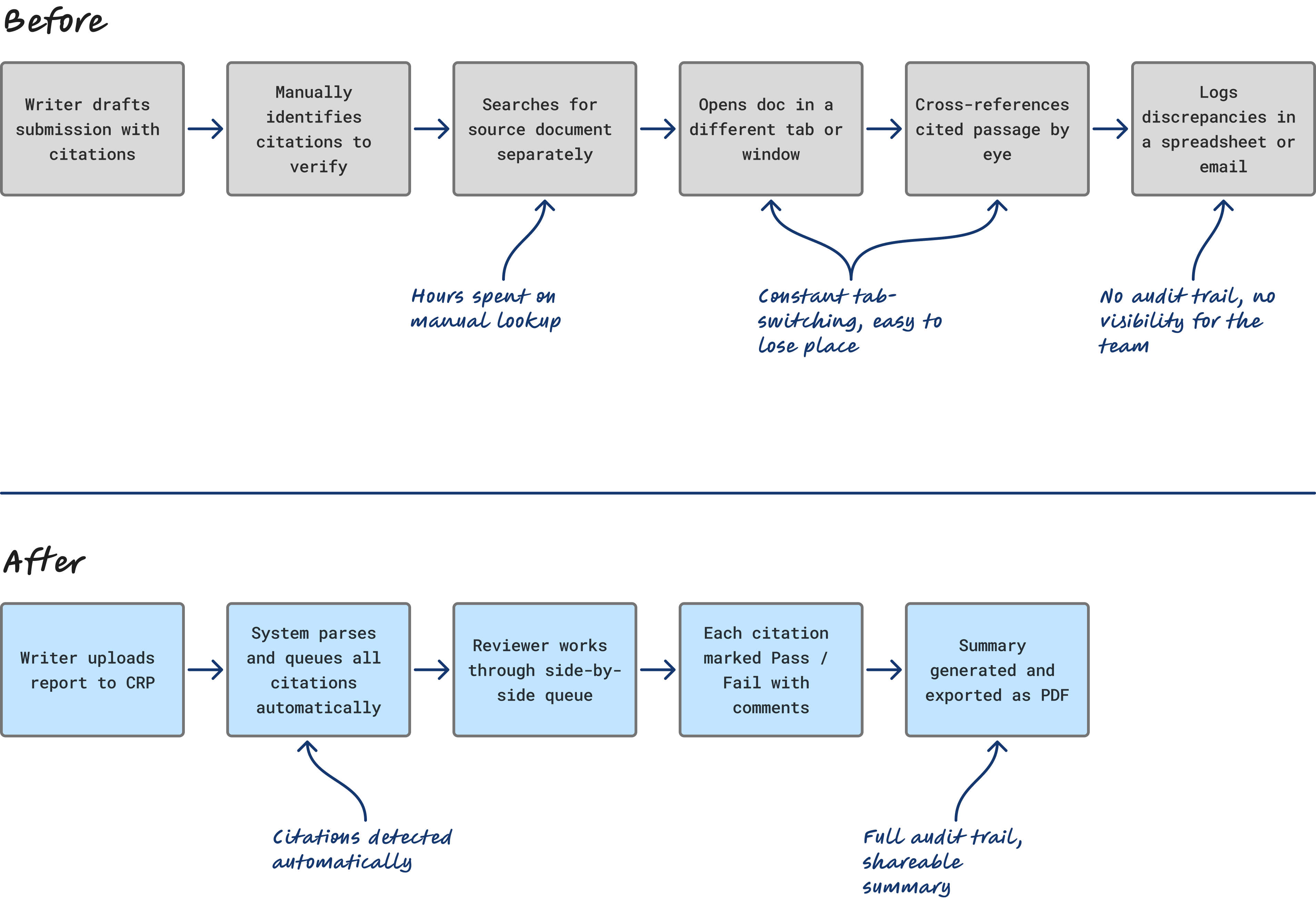
The submission team responsible for FDA report documentation had an established process, but every step of it was manual. For every report, which could contain upwards of 300 individual citations, a reviewer had to locate each source document by hand and verify its accuracy. Corrections were tracked outside of any centralized system, and getting a clear picture of an overall report's status required piecing information together from multiple places. I was brought in as the lead UX designer on a small developer-led team to design a platform from the ground up that could bring that process into one place, using AI in the background to automate the citation lookup and give reviewers a faster, more reliable way to do their work.
IMPACT & METRICS
Citations per report that previously required manual source document lookup one at a time
Hours of estimated manual lookup time saved per report — minutes per citation became seconds
Month reduction in projected report review timeline per FDA submission
to Market
Streamlined review workflows projected to shorten submission timelines, accelerating drug approval and reducing time to market
DESIGN PROCESS
How I approached the work
Exploring the Problem Space
- Joined a small developer-led team as the sole designer on a greenfield project
- Met directly with members of the submission team to understand their current manual process
- Mapped the end-to-end citation verification workflow from report creation to FDA submission
- Identified key pain points including manual source document lookup, fragmented correction tracking, and no centralized status visibility
Defining the Problem
- Defined the core problem as a fully manual, time-intensive process with no centralized system for verification, correction tracking, or status visibility
- Identified security requirements early, including AI data handling, highly restricted data access, and user permission levels
- Worked closely with the project lead to align on what the platform needed to do for MVP versus what could be explored in future phases
- Advocated for metrics to be built into the platform from day one, helping the team understand their importance for securing continued funding
Ideation
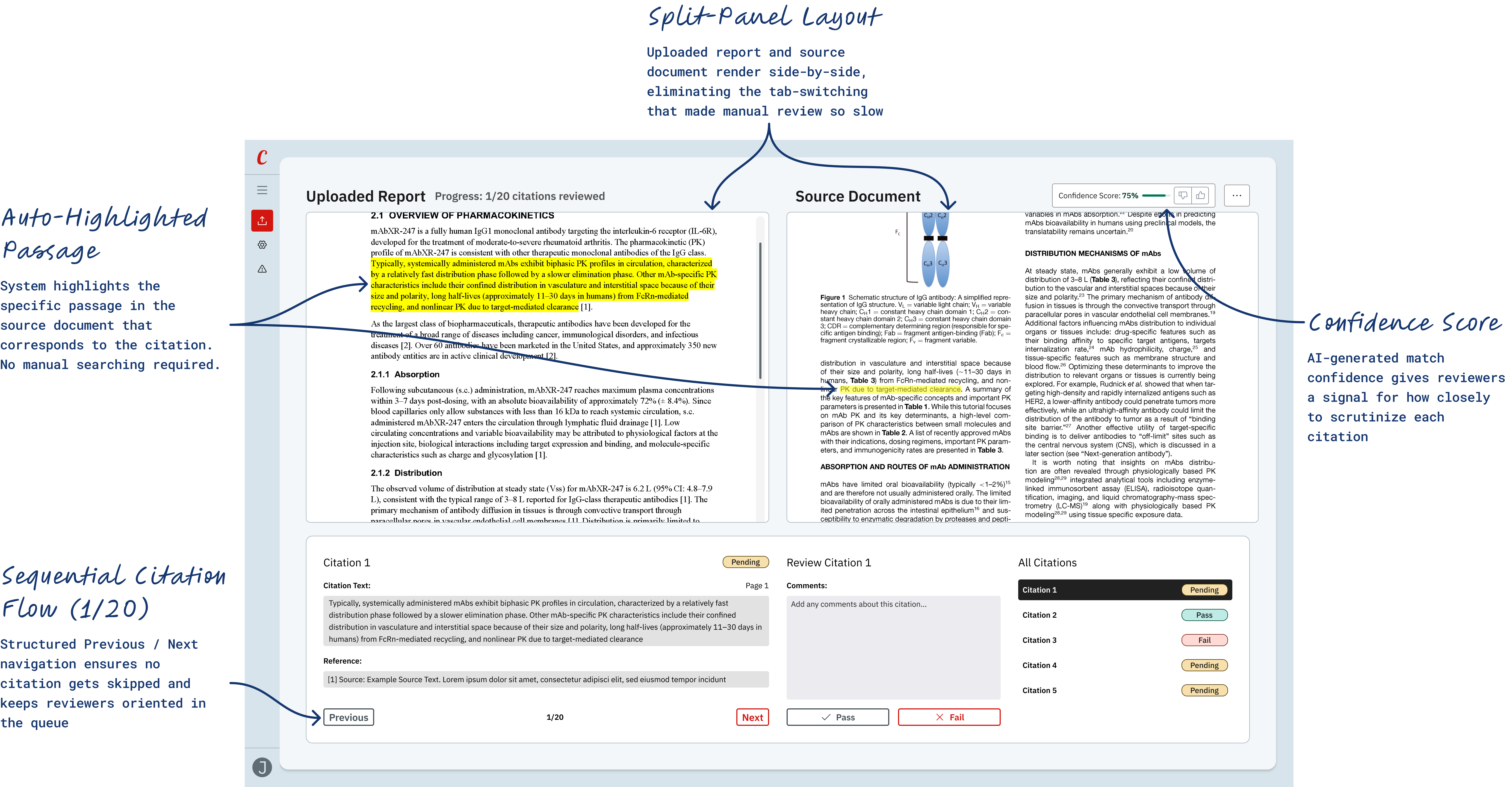
- Designed the end-to-end citation review flow including upload, AI-assisted source lookup, pass and fail decisions, and comment capture
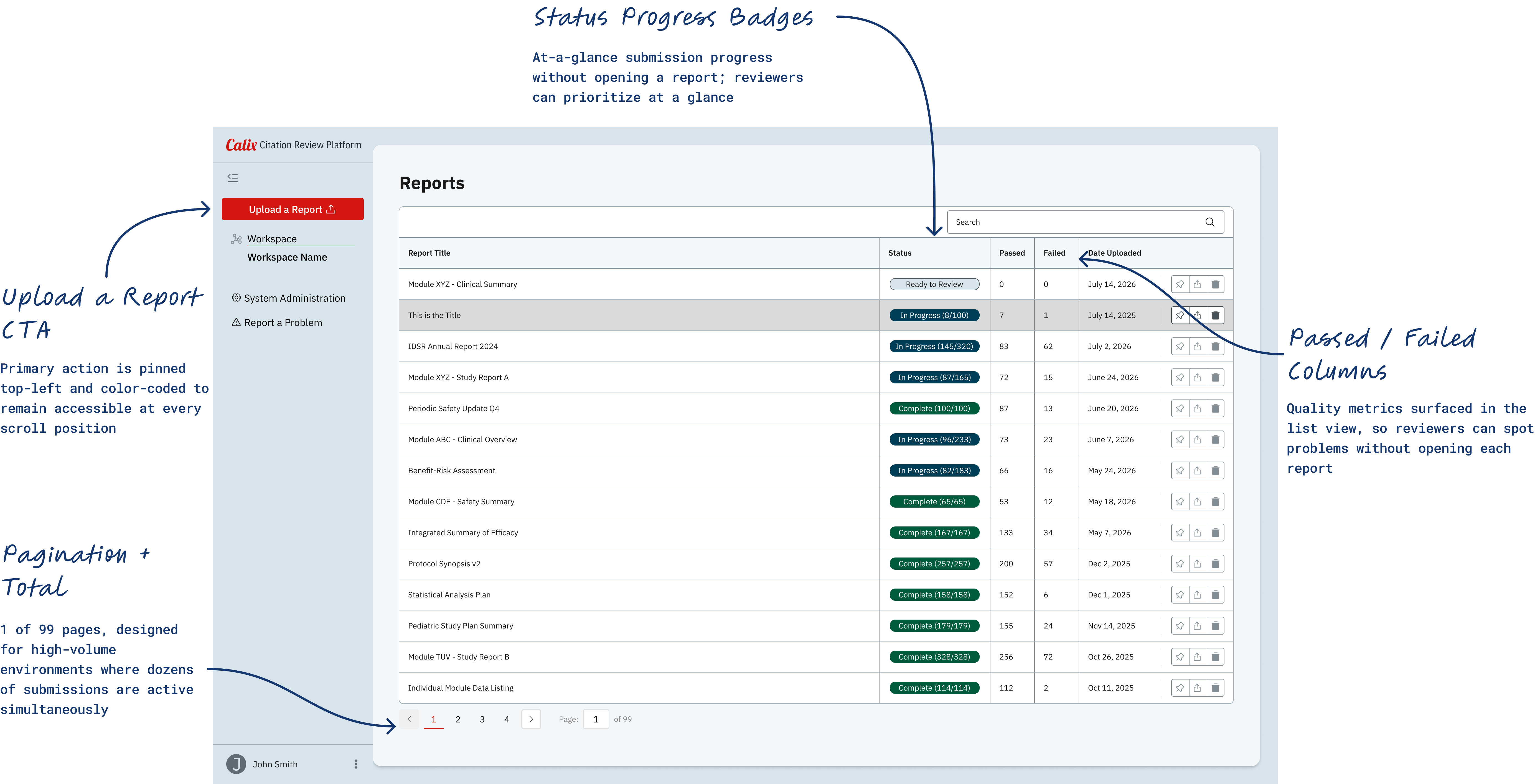
- Planned the dashboard experience for managing multiple reports with status visibility, pinning, and export
- Designed a collapsible side navigation to manage screen real estate with a report and source document displayed simultaneously
- Led brainstorming sessions on future features including multi-user citation assignment for large reports
Final Design
- Designed a citation summary dashboard showing total citations with passed, failed, and pending counts, exportable as a PDF
- Built file conflict handling into the upload flow to manage duplicate report submissions
- Designed a report a problem feature structured to capture enough detail for the development team to reproduce and resolve issues quickly
- Incorporated a confidence score and thumbs up and thumbs down feedback into the UI to measure AI accuracy and inform future improvements
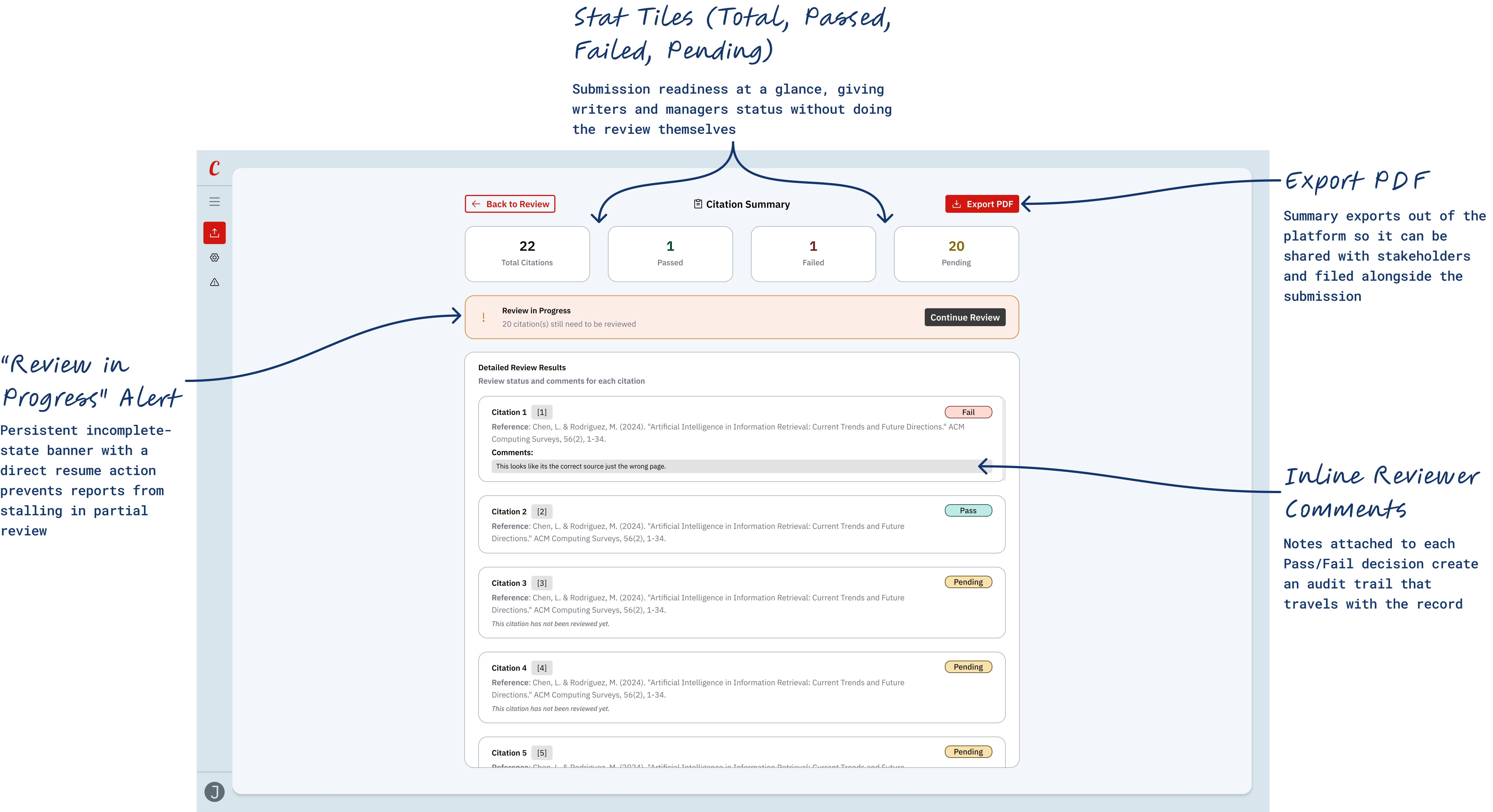
Additional workflows, prototypes, and implementation details are available upon request due to confidentiality requirements.
Reflection
- Designing as the sole UX designer on a developer-led team reinforced the importance of advocating for the user and the business at the same time
- Pushing for metrics early in the process proved critical for helping the team communicate value to stakeholders before anything physical existed
- Leading future-phase conversations before rolling off ensured the team had a clear direction to build toward beyond MVP
- This project reinforced how much impact a single designer can have when they are willing to work across design, strategy, and security thinking simultaneously
Ready to connect?
I am currently exploring new opportunities in experience design and strategy. Feel free to reach out and let's start a conversation.
Get In TouchCONTINUE EXPLORING